
Sanding Paper Styles And Uses
PART 1: BACKING
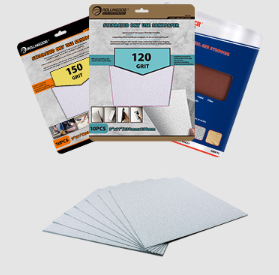
- The majority of ROLLINGDOG sandpaper is made with a kraft paper backing. Some of the paper is latex coated to make it better for wet sanding. This style of sandpaper will normally be used with a hand sander, or wrapped around a block of wood to for better use.
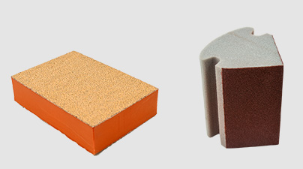
- Sanding sponges are a popular choice for small hand sanding tasks as they make it easy to hold and control with a comfortable grip.
- ROLLINGDOG sanding sponges can be rectangular or angled to sand effectively into corners.
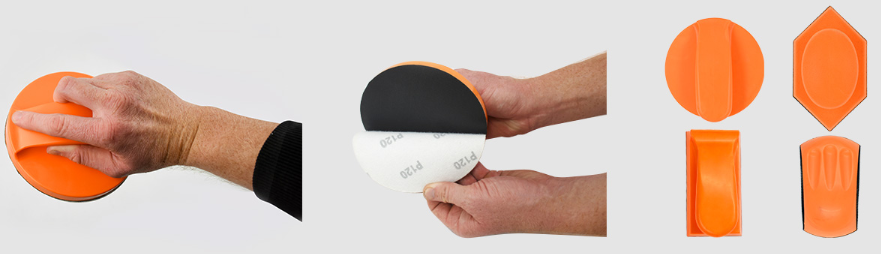
- To improve sanding while reducing fatigue ROLLINGDOG offers a variety PU foam hand sanders with hook and loop attachment to sandpaper refills. This is a great option for someone who knows they will have work requiring sanding more than just once or twice.
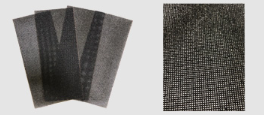
One of the latest sanding products added to the ROLLINGDOG lineup is mesh fabric sanding sheets, with the grit attached to a poly mesh threads woven together for less clogging and better contouring to surface shapes.
Other sandpaper used with power sanders also comes with holes around the paper for tools with vacuum attachment to reduce dust, clogging and buildup of material, effectively making it perform better.

PART 2: GRIT
Sandpaper grit is referring to the small cutting pieces attached to the backing material with an adhesive. ROLLINGDOG grit ranges from 40 to 2000, with 40 being used for heavy surface removal and 2000 being for fine metal finishing.
There are several types of materials that grit is made from, with aluminum oxide and Silicon carbide being the most common. The majority of ROLLINGDOG’s sandpaper is made with Aluminum oxide as it is more durable and longer lasting. But for finishing, silicon carbide would be the preferred choice. Although it is more brittle and less durable than aluminum oxide, its sharper and harder grains allow it to produce a much smoother finish with high grit level sandpaper.
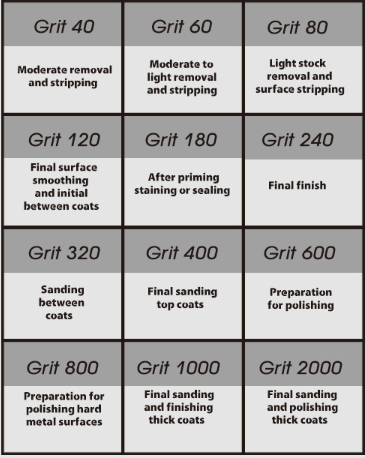
The majority of house painting and related projects will only need to be concerned with60 to 240 grit. Starting from the lowest grit you will progress up to higher grit in steps to ensure no more than needed of surface is removed. Start with 60 grit if there are deep scratches or dents in the surface and once everything is level or looks similar you can begin to smooth it out by using 80 grit, then 120 grit, then 180 grit, and finishing with 240grit for most wooden surfaces. Higher grits are needed for smoothing hard surfaces like metal or fine surface scratches from hardwoods.
ALUMINUM OXIDE GRIT
- Block shaped grains works well on most materials
- Good starting point for metal and wood application
- Lasts longer than silicon carbide

SILICON CARBIDE GRIT
- Sharp needle-like grains allow fast removal
- Best choice for glass, plastic, rubber, and finishing stages of metal surfaces
- Is more brittle and breaks down faster than aluminum oxide

ASK ONE OF OUR REPRESENTATIVES ABOUT VIEWING OURFULL CATALOGUE TO SEE MORE OF WHAT ROLLINGDOG TOOLS HAS TO OFFER FOR SANDING PRODUCTS.